Ideas & perspectives · 4 min read

A sample can look perfect on a table. The better question is how that material will behave across a whole room and after years of use.
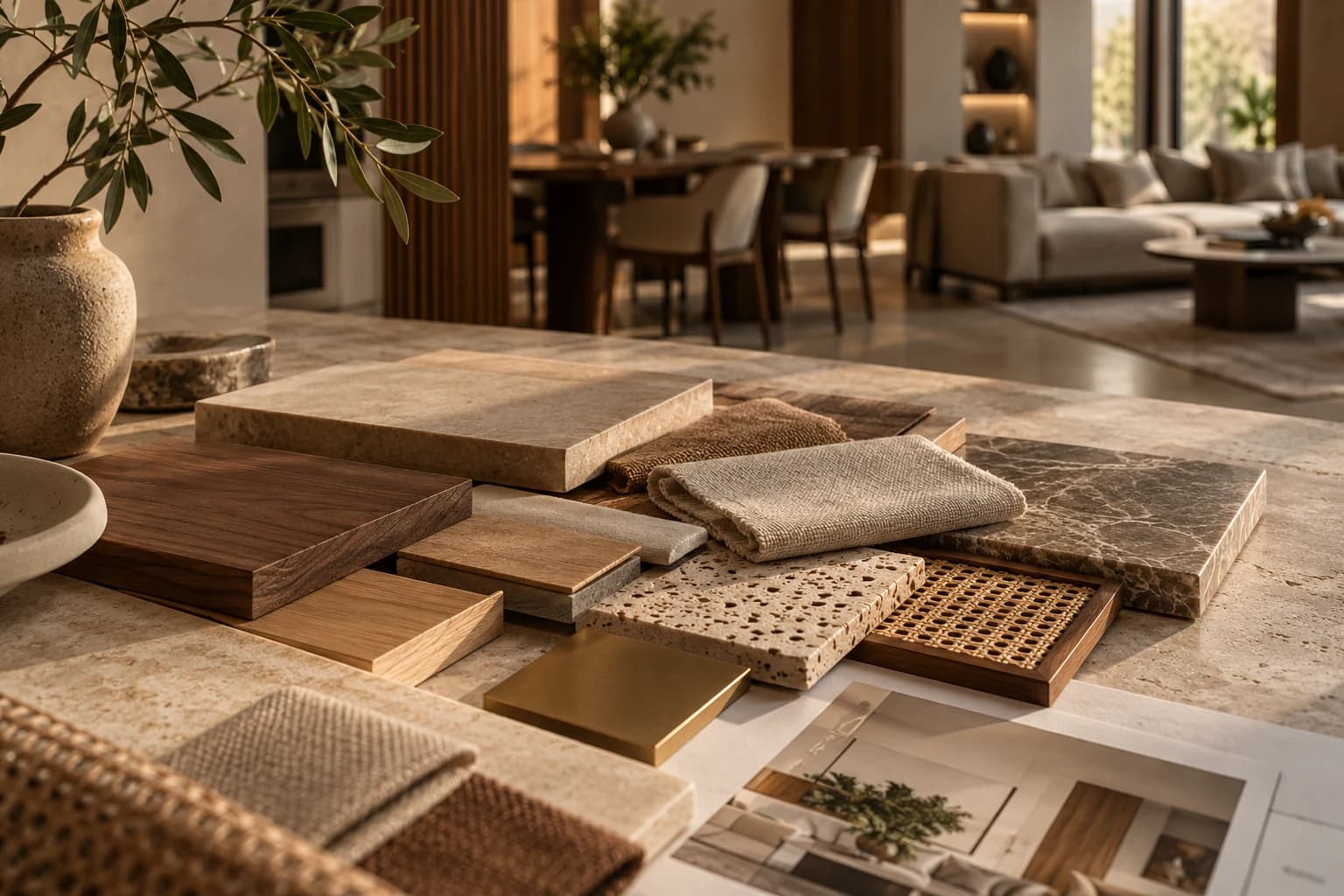
A small sample is persuasive: a grain of walnut, a piece of stone, a woven fabric in the right shade. But the sample does not show how the material will look across a large surface, beside the other finishes, or after someone has cooked, cleaned and lived with it for a few years. Those things are worth considering before the selection is final.
Grain, texture, sheen and the way a surface catches light all affect how a room feels. Two samples in a similar beige or brown can look very different once they are next to a floor, a wall finish and a fabric. Ask to see a larger sample whenever the pattern or grain will cover a prominent area.
Natural materials also vary. The movement in stone or the grain in timber may not match the sample exactly, and that variation is often part of their appeal. It is better to understand that before approval than to expect every section to look identical.
A beautiful surface still has to suit its location. A kitchen worktop faces spills, heat and cleaning. A decorative timber panel in a dry living area has a different job. Fabrics need to stand up to the way a sofa or dining chair is used; woven finishes may need more care in a dusty or frequently handled spot.
Ask the supplier how the finish should be cleaned, what can damage it, and whether it can be repaired if it is chipped or scratched. Follow the specified installation and maintenance guidance.
Take samples to the site and look at them beside the other selected finishes, if possible at different times of day. Daylight and artificial lighting change how colours read. A finish that looks calm in a showroom may appear yellow, flat or much darker in the room where it will be installed.
Do not choose every finish in isolation. Put the main pieces together—floor, cabinetry, counter, paint and fabric—and look at the combination as a whole. A limited palette with a few thoughtful contrasts often feels more coherent than many competing materials.
Some surfaces develop a patina; others show every mark. Neither is automatically better. The right choice depends on whether you enjoy that change and how much time you want to spend maintaining the finish. A lower-maintenance alternative may be the better decision in a busy family home, even if another material is more striking in a photograph.
Good material selection is not about choosing the most expensive option. It is about matching appearance, performance and care to the room and to the people who live with it.
Putting an idea into practice?
If you're weighing up choices for your own home, bring us your floor plan or the questions you're working through. We can help you see what makes sense for your space.
Tell us about your space →Continue reading